WhatsApp has been part of business communication for years. Most brands started by answering basic questions, sharing prices, or confirming orders. That worked for a while.
But customer behaviour has changed.
Today, people expect faster replies, clear options, and quick decisions. They don’t want long conversations just to understand what to do next. This is where WhatsApp Automation becomes important, and this shift is what we now call WhatsApp Commerce 2.0.
At Diginext, we see WhatsApp as more than a chat app. When used correctly, it becomes a reliable sales channel that works all day, every day. It reduces manual effort, improves response time, and helps businesses convert conversations into actual revenue.
In this blog, we’ll break down how WhatsApp Automation supports WhatsApp Commerce 2.0, how flow features work in real life, and why businesses should start adopting this approach now.
Why WhatsApp Automation Is the Backbone of Modern Sales
Customers today are impatient — and honestly, that’s understandable.
If a reply takes too long, interest drops. If the conversation feels confusing, they leave.
WhatsApp Automation helps solve this by bringing structure to conversations.
Instead of typing the same replies again and again, businesses can offer:
- Instant responses
- Clear options
- Pre-defined next steps
This changes the role of WhatsApp from a reactive support channel to a controlled sales journey.
Some clear benefits businesses notice quickly:
- Leads are qualified faster
- Sales teams spend less time on repetitive chats
- Response rates improve
- Customers feel guided, not lost
One big reason brands move to WhatsApp Automation is consistency. Every customer gets the same information, the same flow, and the same experience — whether they message at 10 AM or 10 PM. This reduces dependence on individual team members and keeps communication aligned with the brand.
Automation also brings visibility. You can actually see where people drop off, which options they choose, and what leads to conversions. Over time, this helps businesses improve their sales process instead of guessing what works.
What Are WhatsApp Flow Features
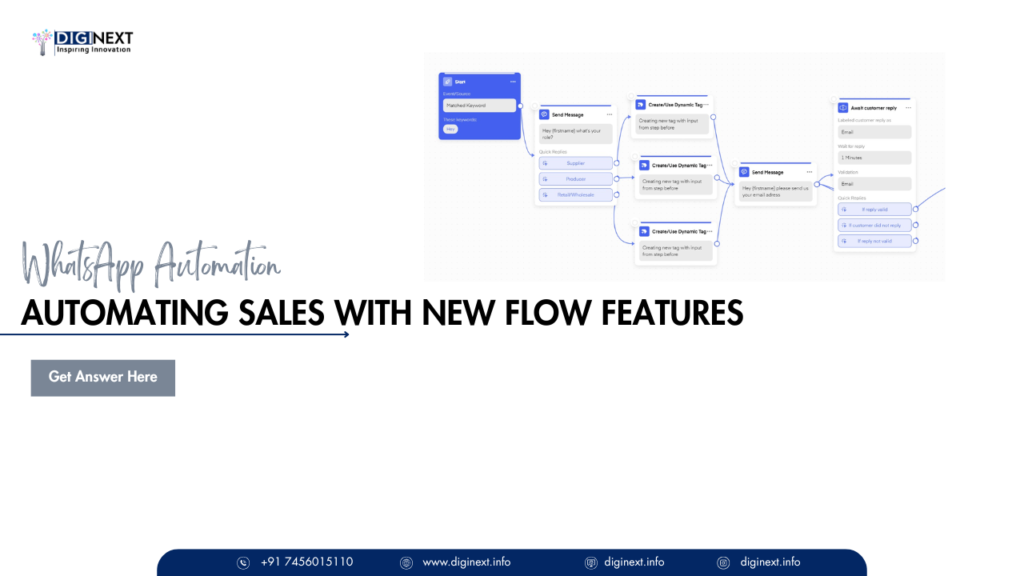
WhatsApp Flow features help businesses guide conversations instead of leaving them open-ended.
Most customers don’t want to type long messages or explain everything. They prefer simple choices and quick actions. Flows are designed exactly for that.
Instead of asking, “How can I help you?”, flows move users step by step.
For example:
- Choosing a product category
- Selecting a budget range
- Booking a demo or consultation
- Connecting with the sales team
Each choice leads naturally to the next action. There’s no confusion and no unnecessary back-and-forth.
Flows are especially useful when customers are unsure about what they want. Rather than pushing them to explain, WhatsApp Flow features gently guide them with clear options. This reduces hesitation and makes decision-making easier.
From a business point of view, this results in fewer abandoned chats and better-quality leads. By the time a customer reaches the final step, they already know what they want and what to do next.
How WhatsApp Automation Improves Sales Conversion
Faster Lead Qualification
Automation helps filter serious buyers early. Instead of sales teams asking the same questions repeatedly, flows collect the basics upfront. This saves time and improves focus.
Always-On Availability
WhatsApp Automation works even outside business hours. Customers can explore options, ask questions, or book appointments without waiting for a reply.
Shorter Sales Cycles
When conversations are structured, decisions happen faster. Customers get clarity early, which reduces delays and drop-offs.
Better Use of Human Effort
Automation doesn’t remove the human touch. It supports it. Sales teams step in only when the conversation needs a personal push or detailed discussion.
Smarter Follow-Ups
Many leads are lost simply because follow-ups don’t happen on time. Automated reminders and nudges keep the conversation alive without sounding pushy.
Real Business Use Cases of WhatsApp Commerce 2.0
WhatsApp Commerce 2.0 works across industries, especially where conversations matter.
E-commerce brands use automation to:
- Share product catalogs
- Answer availability questions
- Send order updates
- Recover abandoned carts
Service-based businesses use it to:
- Book appointments
- Explain services
- Send reminders
- Qualify leads before calls
Education and coaching brands use WhatsApp Automation to:
- Handle course inquiries
- Book demo sessions
- Share fee details
- Onboard students smoothly
In all cases, the goal is the same — reduce effort, improve clarity, and increase conversions.
Why Tool Adoption Matters Now
Many businesses still rely on manual WhatsApp replies. That works only up to a point.
As lead volume grows, response quality drops. Messages get delayed. Follow-ups are missed.
WhatsApp Automation is no longer a “nice-to-have” tool. It’s becoming necessary for brands that want to scale without chaos.
Early adopters benefit from:
- Better lead management
- Lower operational pressure
- Higher conversion efficiency
WhatsApp Commerce 2.0 allows businesses to grow without constantly adding more people to handle chats.
How Diginext Helps Businesses Scale with WhatsApp Automation
At Diginext, we don’t believe in setting up automation just for the sake of it.
We focus on building conversion-focused WhatsApp systems that align with real business goals. This includes:
- Designing custom flow journeys
- Integrating with CRM and payment systems
- Tracking performance and user behaviour
- Continuously improving based on data
Our approach ensures WhatsApp Automation actually supports sales — not just replies.
Final Thoughts
WhatsApp Commerce 2.0 is changing how businesses sell.
Conversations are no longer random. They are guided, intentional, and measurable.
With the right WhatsApp Automation strategy, businesses can turn everyday chats into meaningful conversions and long-term growth.
If you want WhatsApp to work as a proper sales channel — not just a messaging app — this is the direction to move in.